
Multifamily or Multi-Family Rentals: A Small Landlord's Numbers-First Guide
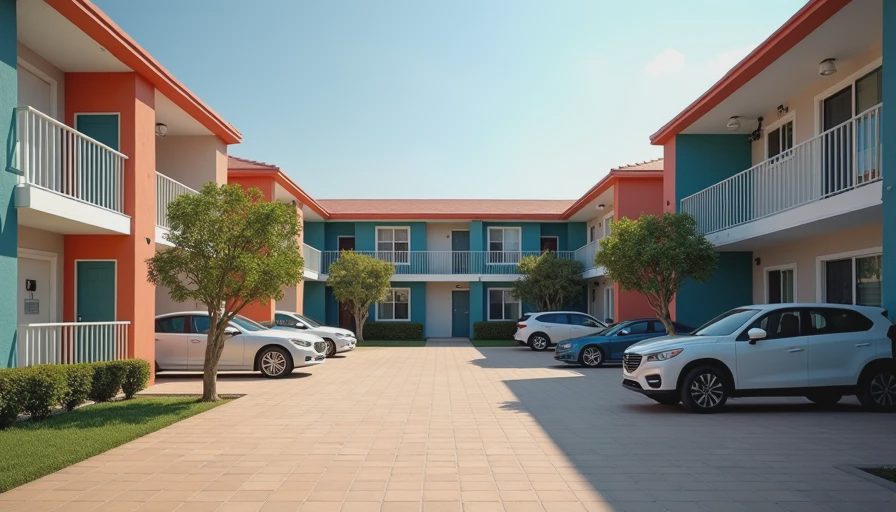
If you are searching for multifamily or multi-family investing advice, you probably do not have a property manager, maintenance crew, and unlimited Saturday mornings. Same. I own four single-family rentals around Charlotte, and every new property has to pass the same test: will the rent pay for the hassle? A multifamily property can create more income under one roof, but it also concentrates plumbing, tenants, insurance, and repairs in one address. That is not automatically bad. It just needs a spreadsheet before it needs an offer.
What multifamily actually means for a small landlord
Multifamily or multi-family usually describes a property with two or more separate residential units. A duplex has two units. A triplex has three. A fourplex has four. Once you move beyond four units, financing and management can become more commercial in practice, even when the property still looks like a normal house from the street.
That distinction matters. With four single-family homes, one vacancy affects 25 percent of your rental income. With a fourplex, one vacant unit affects roughly 25 percent too, but the roof, driveway, exterior walls, and utility systems may be shared. You gain efficiency, but you lose some separation. A broken sewer line is not just one tenant's emergency when all four units use it.
The upside is practical. You might buy one property, arrange one insurance policy, and maintain one yard instead of coordinating four scattered addresses. If the roof costs $16,000, that expense is painful either way. But four units help spread the cost across four rent checks. That is the basic reason multifamily or multi-family properties attract small investors.
Run the numbers before you fall in love with the building
Start with gross scheduled rent. Suppose a duplex rents for $1,450 per unit. That is $2,900 per month, or $34,800 per year. Then subtract realistic expenses: property taxes, insurance, repairs, vacancy, utilities you pay, lawn care, licensing fees, and management if you are not doing it yourself.
A useful first-pass estimate is to reserve 5 percent of rent for vacancy and 8 to 10 percent for repairs and capital replacements. Those are planning assumptions, not laws. An older duplex with original plumbing needs a larger repair reserve than a 2018 building with modern systems. If the property needs a $12,000 roof within three years, put that fact in the spreadsheet now. Do not let a clean kitchen distract you from an aging HVAC unit.
For example, $34,800 in annual rent minus $1,740 for vacancy, $3,300 for repairs, $6,000 for taxes, $2,400 for insurance, and $2,000 for common expenses leaves about $19,360 before debt service. If the mortgage, including principal and interest, is $13,800 per year, the remaining cash flow is about $5,560. That is not a fortune. It is roughly $463 per month before income taxes and larger surprises. Multifamily or multi-family success often looks boring on paper. Boring is fine. Boring pays bills.
The expenses that surprise first-time owners
The first surprise is often utilities. In some duplexes, each unit has separate electric and water meters. In others, the owner pays water for the whole property and divides it through the rent structure. A $180 monthly water bill is $2,160 per year. That can erase a large portion of your expected cash flow.
The second surprise is common-area maintenance. Even a small property may need exterior lighting, snow removal, landscaping, pest control, trash service, and hallway cleaning. A tenant will not care that the shared stairwell light is only a $14 fixture. They will care when it is dark on move-in night.
Insurance also deserves a real quote before you make an offer. Landlord coverage for multifamily or multi-family buildings can differ from coverage for a single-family rental. Ask about dwelling protection, liability coverage, loss of rental income after a covered claim, and whether older wiring or a flat roof creates underwriting problems. A $2,800 annual premium instead of the $1,600 you guessed changes the deal immediately.
I also budget a management line even when I self-manage. My time is not free. If leasing a vacant unit takes twelve hours of calls, showings, cleaning coordination, and paperwork, that is a business expense. You can choose not to pay yourself, but do not pretend the work costs nothing.
Tenant durability beats fancy finishes
Multifamily or multi-family units need finishes that can handle turnover without looking cheap. I would rather install a $2.50-per-square-foot commercial-style luxury vinyl plank than a delicate $6 tile that requires a specialist to repair. In a 900-square-foot unit, that difference is $3,150 before installation. Will the tile produce $3,150 in additional rent? Usually not.
Use satin or eggshell wall paint that can be touched up. Choose simple cabinet hardware with common screw spacing. Install lever handles instead of complicated knobs when the price difference is small. Keep replacement parts easy to find at Lowe's or Home Depot. A special-order faucet is not a personality trait. It is a future Saturday lost to plumbing.
Kitchens and bathrooms deserve money because tenants notice them, but durability still wins. A basic stainless GE range, a reliable Moen faucet, and a standard 30-inch vanity are easier to replace than fashionable products with unusual dimensions. If a flooring sample cannot survive Otis's tail, it does not belong in my rental. He has destroyed exactly zero floors, but he has tested every one.
Managing multiple units without losing your week
The operational advantage of multifamily or multi-family ownership disappears if every small issue becomes an emergency. Create written systems before the first tenant moves in. Use one digital folder for leases, inspection photos, appliance manuals, insurance documents, and vendor receipts. Keep a contact list for a plumber, HVAC technician, electrician, locksmith, and cleaner.
Set communication hours for non-emergencies. A dripping faucet can wait until morning. No heat in freezing weather cannot. Put those definitions in the lease and repeat them at move-in. A simple maintenance form also prevents the classic text message: “The bathroom is acting weird.” Ask for the room, fixture, timing, photos, and whether water is actively leaking.
For multifamily or multi-family buildings, inspect shared spaces on a schedule. Walk the exterior monthly. Look at gutters, grading, railings, lighting, locks, and signs of water intrusion. Small problems are cheap when they are stains. They become expensive when they are ceiling repairs and displaced tenants.

Financing, reserves, and the exit plan
Do not spend every dollar on the down payment. A reasonable reserve target depends on the building, but I would want several months of property expenses available, plus a separate repair reserve for known issues. A duplex with an old roof should not be purchased with the last $20,000 in your account.
Ask lenders how they calculate rental income, what documentation they need, and whether the loan is residential or commercial. Compare the full payment, not just the interest rate. Appraisal issues can also matter. If the property has an unpermitted converted basement or a unit that does not meet local requirements, financing and insurance can become complicated quickly. If it needs an engineer's stamp, I am not teaching you how to solve it from a blog post. Hire the right professional.
Your exit plan can be simple. You might hold the property for ten years, pay down debt, and keep the income. You might sell when management no longer fits your life. You might move into one unit and rent the others, if local rules and financing make that workable. Multifamily or multi-family is not a magic category. It is an operating decision tied to your time, cash reserves, and tolerance for shared problems.
A practical offer-day checklist
Before offering on multifamily or multi-family property, verify current rents with leases and bank deposits. Confirm which utilities are separately metered. Request insurance quotes. Price the roof, HVAC systems, plumbing, windows, and parking surface based on age and condition. Ask who handles trash, lawn care, snow, and pest control.
Then calculate income with one vacant unit, not perfect occupancy. Add a management charge even if you plan to do the work. Test the mortgage payment at a higher rate than today's quote. Finally, ask the uncomfortable question: if one tenant stops paying while another reports a leak, can you handle both financially and emotionally?
That answer is more important than the listing photos. Multifamily or multi-family ownership can be a sensible way to build a retirement plan one property at a time. But the winning building is not the one with the prettiest backsplash. It is the one whose rent, reserves, systems, and daily workload still make sense after the spreadsheet gets honest.
Keep Reading
Listing Terms Cash: What Small Landlords Need to Know Before Buying
Listing terms cash explained for landlords: learn what cash terms mean, how to v...
Bigger pocets for realtors: A Practical Guide for Investor Leads
Bigger pocets for realtors: learn how to turn investor conversations into useful...

Best Markets for Short Term Rentals: A Small Landlord's Numbers-First Guide
Find the best markets for short term rentals by comparing demand, purchase price...
Owner Letters
0 lettersNo letters yet — be the first to write one.