
How to Calculate Rehab Costs for a Rental Property Without Guessing
How to calculate rehab costs is one of those landlord skills nobody teaches you before handing over the keys. You get a contractor's number, stare at it over coffee, and wonder whether $18,000 is reasonable or a polite way to fund his new truck. I have been there. The answer is not a perfect estimate. It is a repeatable system that gets you close enough to make a good decision before you buy.
For a small rental, I want three numbers: the minimum safe scope, the likely scope, and the ugly-but-possible scope. The first keeps the property habitable. The second reflects what I will probably spend. The third protects me from pretending that old houses behave nicely.
Start with a room-by-room scope
Before pricing anything, walk the property with a phone, tape measure, flashlight, and a notes app. Do not write “renovate kitchen.” That is how budgets disappear. Write “remove laminate counters, install 10 feet of butcher block, replace sink, reconnect faucet, paint cabinets, install pulls.” Specific work can be priced. Vague work becomes a surprise invoice.
For each room, record the condition of floors, walls, ceilings, windows, doors, outlets, plumbing fixtures, appliances, cabinets, and lighting. Take photographs with a wide view and close-ups. Measure flooring areas, wall lengths, cabinet runs, and countertop length. Add a note for anything that could affect labor, such as stairs, tight hallways, damaged subfloor, or a dumpster that cannot sit in the driveway.
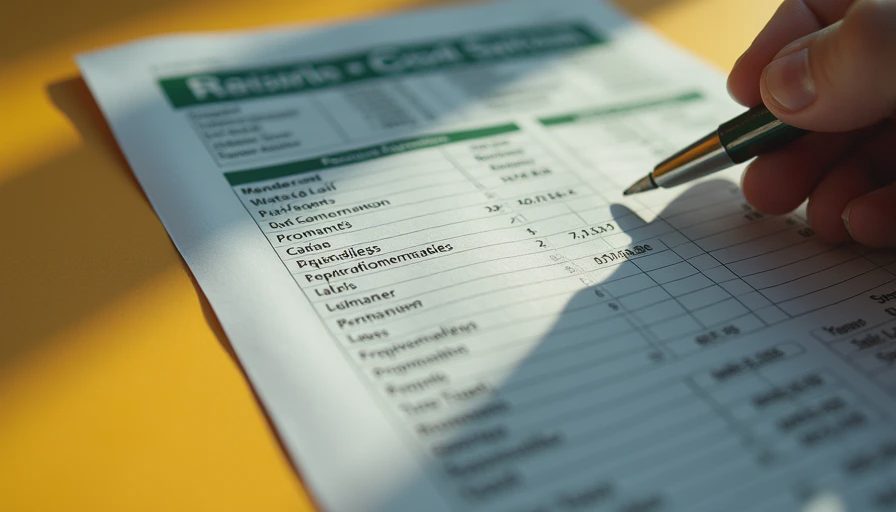
My spreadsheet has columns for item, quantity, unit cost, labor, material source, and decision. The decision column matters. “Repair,” “replace,” and “defer” are not the same thing. A dated but functional bathroom vanity might stay. A toilet that rocks because the flange is broken does not get a decorative bandage.
How to calculate rehab costs with unit prices
The basic formula is simple: quantity multiplied by unit cost, plus labor, plus disposal and delivery. If a rental needs 900 square feet of flooring, and the material costs $2.40 per square foot, the flooring itself is $2,160. Add 10% for cuts and waste, bringing the order to 990 square feet, or about $2,376 before installation.
Then price labor separately. Flooring installation might run $1.50 to $3.50 per square foot in many markets, depending on removal, furniture movement, stairs, and subfloor repairs. At $2.25 for 900 square feet, installation is $2,025. Add $450 for tear-out and disposal, and that flooring line is approximately $4,851—not the $2,160 you first noticed in the store.
Use the same approach everywhere. Painting is priced by room, square footage, or project. Cabinets are priced by linear foot or door count. A water heater includes the unit, installation, permits when required, haul-away, and possible code updates. A roof estimate should separate shingles, underlayment, flashing, ventilation, tear-off, and disposal.
This is how to calculate rehab costs without letting a low material price fool you. Labor is often the largest line, and small jobs can be expensive because contractors still have travel, setup, scheduling, and minimum-charge costs.
Build a realistic labor estimate
Get at least two written bids for substantial work. Three is better if the project is above $15,000. Give every contractor the same scope and ask for labor and materials to be broken out. Otherwise, you are comparing one complete bid with another contractor's optimistic “starting at” number.
Ask what is excluded. Common omissions include surface preparation, trim, hauling, permits, appliance connections, paint in closets, and repairs discovered after demolition. Ask whether the quote includes sales tax and who buys the materials. A 20% markup on materials is not automatically unreasonable; it can cover ordering, delivery, warranty coordination, and the contractor's time. You just need to see it.
For a small bathroom, labor might easily exceed materials. A $900 toilet, vanity, mirror, and light package can become a $3,500 project after demolition, plumbing adjustments, tile repair, painting, trim, and disposal. I once tried to retile a bathroom alone. Chloe brought me ice packs while I crawled around on the floor. Now I price my own time at zero only for work I genuinely want to learn—and I hire out anything that can strand a tenant without a working bathroom.
If the work involves structural changes, major electrical service, sewer lines, or an engineer's seal, hire the qualified professional. That is not the place to save $600 and create a $12,000 problem.
Add contingency, permits, and vacancy
A contingency is not extra money for prettier finishes. It covers known unknowns: rotten subfloor beneath vinyl, outdated wiring behind a wall, a shutoff valve that will not close, or a delivery delay that extends vacancy. I use 10% for a clean, well-documented refresh and 15% to 20% for an older property with deferred maintenance. On a $24,000 project, 15% adds $3,600.
Include permit fees and inspections in the estimate. Rules vary by location, but electrical, plumbing, HVAC, roofing, and structural work commonly trigger permitting. The contractor should identify requirements, but I verify with the local building department before work starts. A permit delay can turn a planned 14-day turnover into a month.
Vacancy belongs in the rehab budget too. If market rent is $1,850 per month, a two-week delay costs roughly $925 in lost rent. Add utilities, lawn service, insurance, and loan interest during the empty period. That $925 is a real project cost even though it never appears on a hardware-store receipt.
How to calculate rehab costs against rent and value
A finished rental should earn back its cost through safer operation, lower maintenance, better tenant appeal, or higher rent. Not every upgrade needs to increase rent directly, but every dollar needs a job.
Suppose a $9,000 flooring and paint project lets you rent for $125 more per month. Gross rent recovery takes 72 months, or six years, before considering turnover and maintenance. That can still be reasonable if the old carpet was failing every year. But spending $5,868 on premium LVP because it looks impressive is harder to defend if ordinary commercial-grade flooring would perform for $3,600 and rent for the same amount.
Compare the rehab cost with the property's expected value only when the improvement affects market value and you have realistic comparable sales. A new kitchen rarely returns every dollar in a small rental. Functional, durable, clean, and easy to repair usually beats luxury. If it will not survive Otis's tail, it does not belong in my rental.
Also separate capital improvements from routine repairs in your records. Painting between tenants, fixing a leaking faucet, and replacing damaged flooring can receive different accounting treatment from a major renovation. Keep invoices, contracts, receipts, permits, and before-and-after photos. Ask a tax professional how the work should be classified for your property and situation.
A practical rehab budget example
Here is a straightforward turnover on a 1,100-square-foot house:
- Interior paint: $3,200, including preparation and labor
- LVP flooring in living areas: $5,100, including removal and installation
- Bathroom refresh: $4,800, including vanity, fixtures, labor, and minor plumbing
- Appliance replacement: $2,600
- Exterior cleanup and minor repairs: $1,400
- Locksmith, smoke detectors, and hardware: $500
- Cleaning and final haul-away: $450
The working subtotal is $18,050. Add a 15% contingency of $2,708, then budget about $925 for two weeks of vacancy. The decision number is approximately $21,683—not $18,050. If the property only works when the rehab stays below $19,000, the deal is too tight unless you can reduce scope before closing.
That is the point of learning how to calculate rehab costs. You are not trying to predict every nail. You are testing whether the property survives ordinary bad news.
How to calculate rehab costs before making an offer
Do a fast first pass before submitting an offer. Estimate the major systems, flooring, paint, kitchen, bathrooms, exterior, cleanup, contingency, and vacancy. Use conservative numbers. Then call contractors for the two items most likely to break the deal, such as a roof and HVAC system.
Next, create a must-do list and a rent-ready list. Must-do work includes safety, habitability, active leaks, failed systems, and local compliance issues. Rent-ready work includes cleaning, paint touch-ups, hardware, and durable cosmetic repairs. Nice-to-have work—accent walls, upgraded lighting, fancy backsplashes—waits until the property has paid you back.
Finally, run low, expected, and high totals. If the expected budget is $22,000 but the high case is $31,000, use the high number when deciding what you can afford. How to calculate rehab costs becomes much less stressful when the spreadsheet tells the truth before the closing papers do.
Let's run the numbers. Price the actual scope, include labor and vacancy, carry a contingency, and choose finishes that can handle tenants, pets, and the occasional enthusiastic dog tail. Your future self will thank you.
Keep Reading

How to Value a Property Management Company Without Guessing
How to value a property management company using income, market, and asset metho...

Cost to Subdivide Land: A Small Landlord's Real-World Budget
Cost to subdivide land can range from a few thousand dollars to much more. Learn...

How to Compare homestyle renovation loan rates Before You Rehab a Rental
Compare homestyle renovation loan rates, closing costs, points, and rental-prope...
Owner Letters
0 lettersNo letters yet — be the first to write one.