
Cash Flow Analysis Rental Property: How I Run the Numbers Before I Buy
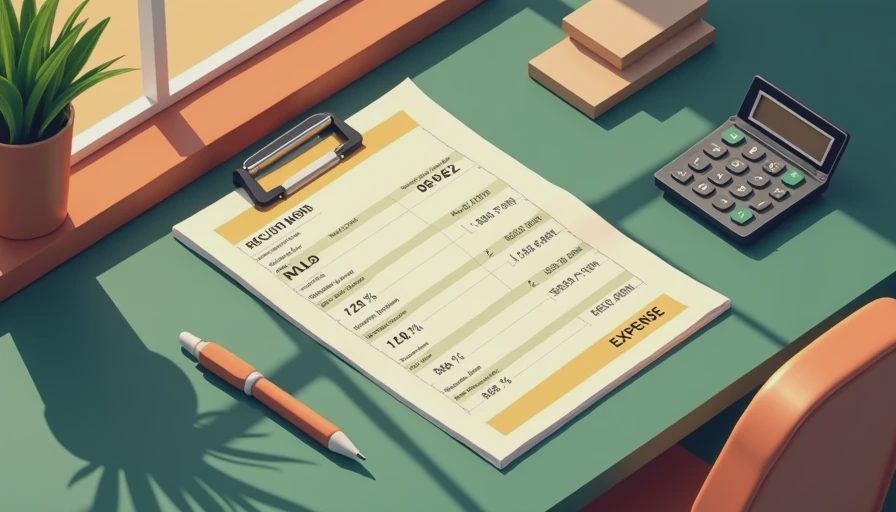
When I look at a cash flow analysis rental property, I am not asking whether the house is cute. I am asking whether it pays me on a boring Tuesday after taxes, insurance, a slow leak, and one tenant who texts at 9:17 p.m. because the garbage disposal gave up. That is the whole game. The property has to cover itself and leave a cushion. If it does not, I keep walking. No romance. No maybe. Let's run the numbers.
Start with the rent you can actually collect
I start with the rent I can prove, not the rent someone hopes to get after one fresh coat of paint. If three similar homes on the same street are renting between $1,875 and $1,950, I do not let a glowing listing tell me the number is $2,100. I use the middle. I also subtract any obvious concessions, like one free week or a move-in special, because those cute little discounts are real money.
A $75 difference in monthly rent is $900 a year. That is a water heater, a fridge, or half a roof patch. I would rather underwrite to the annoying number and be pleasantly wrong than fall in love with a deal that only works in a perfect month. If the market feels soft, I shave the rent a little harder. If the house has odd features or an awkward layout, I do not pretend that charm is a financial strategy.
I also look at turnover. A house that rents fast to good tenants is worth more than one that sits empty because the carpet smells weird and the kitchen looks like 2004 called. If I think the vacancy risk is higher than normal, I do not pretend otherwise. I lower the rent estimate or I lower the offer.
Build the expense stack before you get excited
This is where most spreadsheets get too cheerful. They show principal and interest, maybe taxes and insurance, and somehow forget the stuff that actually eats cash. I separate expenses into fixed and variable. Fixed is the mortgage, property tax, insurance, HOA if there is one, and any recurring lawn or pest contract. Variable is repairs, vacancy, turnover cleaning, and the random nonsense that happens because a rental is a rental.
In cash flow analysis rental property work, I also set aside money for capital items. A water heater. An AC capacitor. A refrigerator that decides to die on the hottest week of August. I do not call that profit just because the account balance looks happy in March. If the roof is 17 years old, I act like a roof bill is already sitting on my desk with a sticky note on it. Same with carpet. Same with a washer and dryer that have already survived one tenant with three kids and a dog.
I keep two reserve buckets in my head. One is for regular repairs and turnover. The other is for the bigger stuff that shows up less often but hits harder. A turnover clean can run $150 to $400. A dryer replacement can be $650 to $1,000. A decent LVP install in one room can vanish into the thousands fast if you are not watching the square footage. If you own multiple doors, those little hits stack up fast.
My rough rule is simple. If I self-manage, I still set aside 8% to 10% of collected rent for maintenance and another slice for vacancy and turnover. If I use a property manager, I add that fee too, usually 8% to 10% of collected rent. Some houses need more. Some need less. The point is not precision down to the penny. The point is not fooling yourself.
Run a sample deal before you fall in love
In cash flow analysis rental property work, I like to model the deal with management included, because that is the version that hurts less later. Let's say the house costs $235,000 and I put 25% down. That leaves a loan of about $176,250. At a 6.5% rate on a 30-year mortgage, principal and interest land around $1,114 a month. The market rent is $2,250. Property taxes are $220. Insurance is $110. I budget $113 for vacancy, $225 for repairs and maintenance, and another $113 for capital reserves. If I self-manage, the math looks pretty decent. If I pay a manager about 8%, that is another $180 or so.
That puts total monthly expense around $2,055 with management, leaving about $195 in monthly cash flow. Without management, I am closer to $375. That is the kind of spread I want to see, because one ugly month can eat a lot of optimism. A plumber visit might run $180. A locksmith after a lockout can be $125. A late-season HVAC repair can swallow the whole margin if you are not careful. And that is before the surprise stuff, like a mailbox hit, a clogged main line, or a tenant who breaks a blind every time they open a window.
When I look at a deal like that, I also factor in cash to close, not just the down payment. Closing costs can easily run a few thousand dollars. If I am bringing 25% down plus another chunk for reserves, I want to know exactly how much stays liquid after the purchase. A house that looks fine on paper but drains every last dollar at closing is not a cash-flow machine. It is a stress machine.

Stress test the numbers before you sign
This is the part that keeps me out of trouble. I run the numbers three ways. First, I test the rent at 5% below my target. Second, I add one extra month of vacancy for the year. Third, I bump repairs by a few hundred dollars, because something always bumps repairs. If the deal still shows a small positive number, I keep looking. If it flips negative the second I get honest, I pass.
A cash flow analysis rental property should also tell you whether the property can tolerate a rate reset or an insurance jump. I have seen taxes rise after reassessment and insurance climb after a claim in the neighborhood. Not every year, not everywhere, but enough that I do not ignore it. A good deal has room for ugly news. A bad deal is one fence repair away from panic. I learned that the hard way once when a polite little plumbing issue turned into a Saturday, a ladder, two hardware store runs, and a headache I did not need.
Know your line before you buy
My personal line is simple. I want enough monthly cushion to cover a surprise without raiding my personal checking account. For me, that usually means at least $200 to $300 a month after normal reserves, and more if the house is older or the systems are near end of life. I also want the numbers to make sense if I have to hand management to someone else later, because life changes. Jobs change. Kids get older. Your I can handle this myself era does not last forever.
That is why I keep coming back to cash flow analysis rental property before I write an offer. It is not about making the spreadsheet look clever. It is about making sure the house can pay its own bills and still leave me breathing room. If the numbers are solid, I can sleep. If they are fuzzy, I keep my money in my pocket and move on to the next one.
Keep Reading
How to Calculate Rehab Costs for a Rental Property Without Guessing
Learn how to calculate rehab costs for a rental with labor, materials, permits, ...

How to Value a Property Management Company Without Guessing
How to value a property management company using income, market, and asset metho...

Cost to Subdivide Land: A Small Landlord's Real-World Budget
Cost to subdivide land can range from a few thousand dollars to much more. Learn...
Owner Letters
0 lettersNo letters yet — be the first to write one.